Snyk Fetch The Flag, Zero Ex Six One
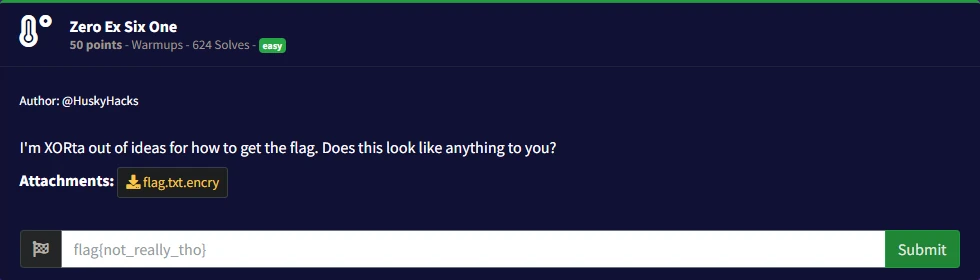
In this challenge, we obtain a file named flag.txt.encry, which contains a hexadecimal string.
$ cat flag.txt.encry
0x070x0d0x000x060x1a0x020x540x510x050x590x530x020x510x000x530x540x070x520x040x570x550x550x050x510x560x510x530x030x550x500x050x030x050x510x590x540x000x1c
The 💡 hint in the challenge description suggests that an XOR encryption was used, and the challenge title, Zero Ex Six One, might indicate that the encryption key is 0x61.
I'm XORta out of ideas for how to get the flag. Does this look like anything to you?
Solution 1, Using the Encryption Key
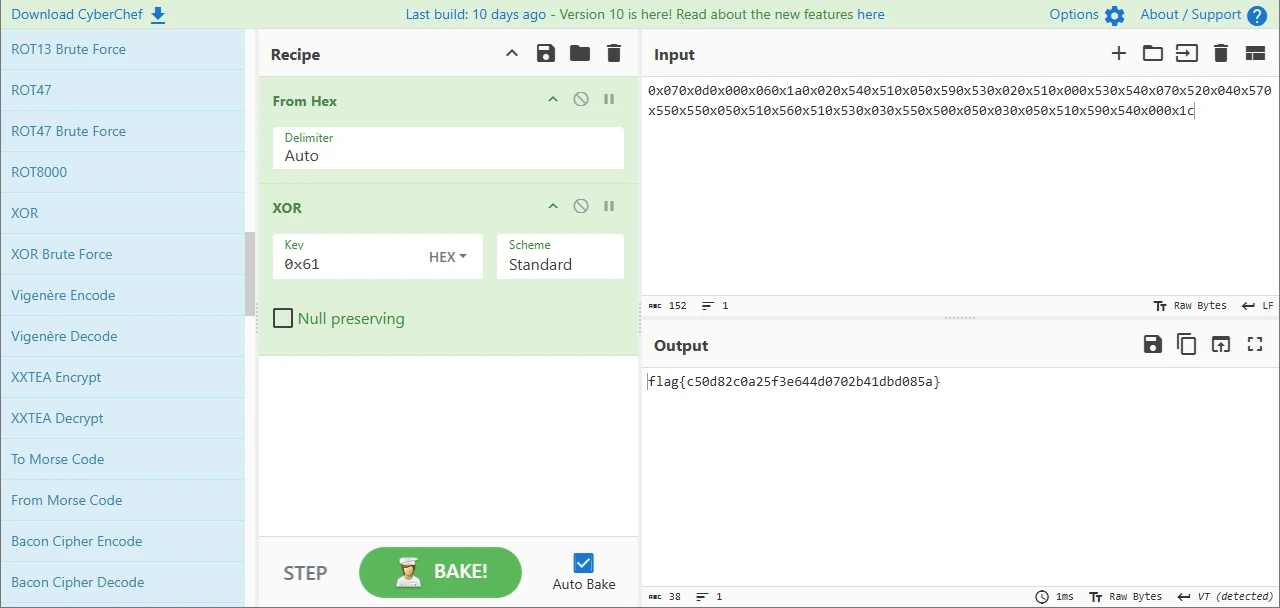
In this first solution, we convert the hexadecimal string into bytes and apply an XOR decryption using the key 🔑 0x61.
# Encrypted hexadecimal string provided
hex_data = "0x070x0d0x000x060x1a0x020x540x510x050x590x530x020x510x000x530x540x070x520x040x570x550x550x050x510x560x510x530x030x550x500x050x030x050x510x590x540x000x1c"

# Remove "0x" for proper conversion
clean_hex_data = hex_data.replace("0x", "")

# Convert the hexadecimal string to bytes
ciphertext = bytes.fromhex(clean_hex_data)

# Define the encryption key
key = 0x61

# Apply XOR to each byte using the key
decrypted = bytes([b ^ key for b in ciphertext])

# Display the result in readable text
print(decrypted.decode('utf-8', errors='ignore'))
$ python zero_ex_six_one.py
flag{not_really_tho}
You can also use Cyberchef
Solution 2, Without Knowing the Encryption Key
In this solution, we do not use a predefined encryption key. Instead, we deduce the key based on the assumption that the first letters of the decrypted text should be flag 🤔.
# Encrypted hexadecimal string provided
hex_data = "0x070x0d0x000x060x1a0x020x540x510x050x590x530x020x510x000x530x540x070x520x040x570x550x550x050x510x560x510x530x030x550x500x050x030x050x510x590x540x000x1c"

# Remove "0x" for proper conversion
clean_hex_data = hex_data.replace("0x", "")

# Convert the hexadecimal string to bytes
ciphertext = bytes.fromhex(clean_hex_data)

# Known plaintext text ("flag")
known_plaintext = b"flag"

# Calculate the XOR key by comparing the first 4 encrypted bytes with "flag"
key = bytes([ciphertext[i] ^ known_plaintext[i] for i in range(4)])

# Apply XOR to each byte using the discovered key
decrypted = bytearray()
for i in range(len(ciphertext)):
    decrypted.append(ciphertext[i] ^ key[i % len(key)])

# Display the result in readable text
print(decrypted.decode('utf-8', errors='ignore'))
$ python zero_ex_six_one_no_key.py
flag{not_really_tho}
Both solutions successfully retrieve the flag, either by knowing the encryption key beforehand or by deducing it from known plaintext patterns.